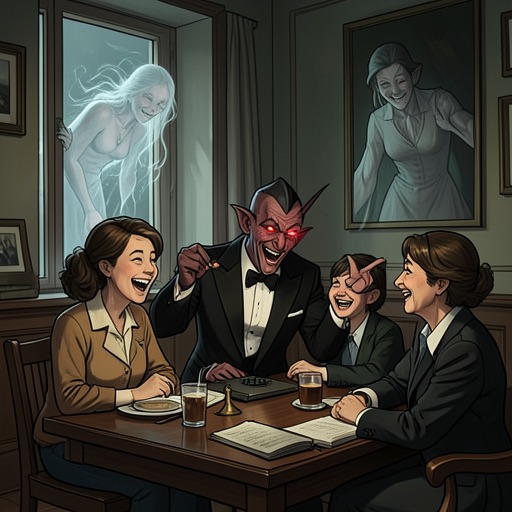
Count von Count
A History of the Vampire in Popular CultureCount von Count, usually called the Count, is one of the most recognizable comic transformations of the vampire in popular culture. A character on Sesame Street since 1972, he retains the silhouette and atmosphere of the classic aristocratic bloodsucker while replacing menace with an enthusiastic compulsion to count. His importance lies in that contrast: the figure once associated with death, predation, and the uncanny becomes a genial educational performer whose rituals make frightening folklore safe for children without erasing its theatrical traces.
Identity and Appearance
The Count aesthetically riffs on Bela Lugosi’s portrayal of Count Dracula, adopting an unmistakably Eastern European manner and an apparent upbringing in the Carpathians. His full name is rarely used, since the simpler title makes his function immediately legible: he is both a vampire and the personification of counting. His familiar refrain, “One, ah ah ah, two, ah ah ah…”, turns an ordinary numerical exercise into a miniature imitation of a vampire’s melodrama.
His setting preserves the architecture of old vampire fiction. He lives in a dusty old castle, shares it with bats named Grisha, Misha, and Sasha, and keeps both a cat and a pet octopus. He plays the violin and the pipe organ, details that present him as a creature of cultivated, theatrical taste rather than as a mere gag. Even his personal thundercloud contributes to the performance: it follows him around and supplies bursts of thunder and lightning at moments chosen for dramatic effect.
Counting as Character and Folkloric Function
The Count’s arithmomania is more than a repeated joke. It has been interpreted as an adaptation of older protective superstitions in which people scattered seeds or other tiny objects to distract supernatural beings compelled to count every item. In this version, the supposed defensive weakness becomes the vampire’s defining pleasure. The old fear is retained as a formal pattern, but its power is redirected into arithmetic, repetition, and audience participation.
That compulsion governs the Count’s behavior even when counting is inconvenient or destructive. In one anecdote, he counted chickens before they hatched because he planned to sell them, only for the prospective purchasers to receive turtles or alligators instead. In another, while working as a lift operator, he insisted on stopping at every floor so that each one could be counted properly, frustrating Kermit the Frog. When nothing else is available, he counts himself. These incidents make the supernatural habit comic by showing its consequences in mundane situations, while also preserving the sense that the compulsion is nearly impossible to resist.
From Threat to Educational Comedy
Count von Count illustrates a broader cultural process in which legendary bloodsucking demons are made cute, comic, or cartoon-like in order to reduce their frightening force. Early vampire traditions included Lamia, who sucked the blood of sleeping children; Astryiah, an elderly female vampire said to draw blood through her hair; the impundulu, a witch’s dangerous familiar; and revenants whose corpses were believed to rise from the grave. Later stories added seductive predators such as the baobhan sith, while nineteenth-century fiction increasingly shaped the vampire into an elegant and emotionally legible figure through Varney, Carmilla, and Dracula.
The Count belongs to the next stage of that transformation. Instead of the ugly revenant, the sensual predator, or the devious aristocratic villain, he offers a friendly figure whose danger has been almost entirely neutralized. The character’s repeated numbers, amiable movement, and affection for his bats invite children to enjoy the performance rather than fear the creature. The vampire’s recognizable costume and voice keep a connection to horror history, but the educational setting changes the value of those signs: the cloak becomes play-acting, the thunder becomes comic timing, and the appetite for blood becomes an appetite for numbers.
Early Menace and Comic Revision
The Count was not always presented as harmless. When he first appeared in the early 1970s, he entered from behind a cloak in the manner of Bela Lugosi, used a maniacal laugh accompanied by crashing thunder, and could control other characters through glamour or hypnosis. These traits brought him closer to the conventional supernatural antagonist. They were subsequently softened because the producers feared frightening the young audience, leaving a character who is now difficult to take seriously as a threat.
The revision is especially clear in the contrast between his former powers and his current routines. Hypnosis and predation imply domination, whereas counting requires patience and produces shared attention. His favorite time of day, 2.30, becomes a pun on “tooth-hurty” rather than an occasion for nocturnal violence. The joke acknowledges the vampire’s association with teeth while converting it into a piece of harmless verbal play. Count von Count therefore does not simply abandon the vampire tradition; he exposes its mechanisms and lets children handle them without danger.
Cultural Significance
Count von Count demonstrates that a vampire can remain recognizable after its central threat has been removed. The castle, bats, thunder, cultivated instruments, accent, cloak-like presentation, and Lugosi-derived aesthetic preserve an aura of the old monster, while counting supplies a new social purpose. The character makes the conventions of the vampire visible as conventions, then uses them to support learning and comic repetition.
His continuing appeal also reflects a persistent desire to humanize or domesticate the supernatural. Modern vampires can be heroes, romantic figures, outsiders, or openly integrated members of society, and Count von Count pushes that flexibility toward children’s comedy. The result is not merely a parody that laughs at the vampire. Like other successful comic vampires, he remains affectionate toward the tradition he transforms. His ridiculousness depends on the audience recognizing the grave, elegant, dangerous figure beneath it; without that shadow, the counting would lose much of its theatrical charge.